
Hard Trivia Questions and Answers: 40 Tough Questions for Smart Players (2026)
Think you know it all? First, try these hard trivia questions if easy quizzes feel too simple for you. From science and history to geography, books and sport, every question below makes you stop and think. In addition, every answer comes with a short explanation, so you learn something even when you get one wrong.
Below you will find 40 hard trivia questions in five rounds of eight. So, play on your own, challenge friends at quiz night, or use them in a classroom. Then grab a pen, keep score, and check your result at the end.
1. How This Hard Trivia Quiz Works
- 40 questions, 1 point each. First, every question has one correct answer, shown right after it.
- Five rounds of eight questions: science, history, geography, arts and culture, and sport and general knowledge. In addition, each round has its own theme, so you can play one round at a time.
- Play it your way: solo for bragging rights, with friends as a party game, or in a classroom as a fun challenge. For example, teams make quiz night more fun.
- Finally, the scoring guide at the end tells you whether you are a casual player, a strong quizzer or a true trivia expert.
First, if you want a gentler warm-up, try our trivia questions and answers collection before you take on the hard round.
2. Round 1: Science and Nature
These science questions go beyond the facts most people remember from school. So, how many can you answer without guessing?
Q1. What is the only metal that is liquid at room temperature?
Answer: Mercury — people once used it in thermometers because it stays liquid at room temperature. For example, an old thermometer showed the temperature as the mercury rose and fell inside the glass tube.
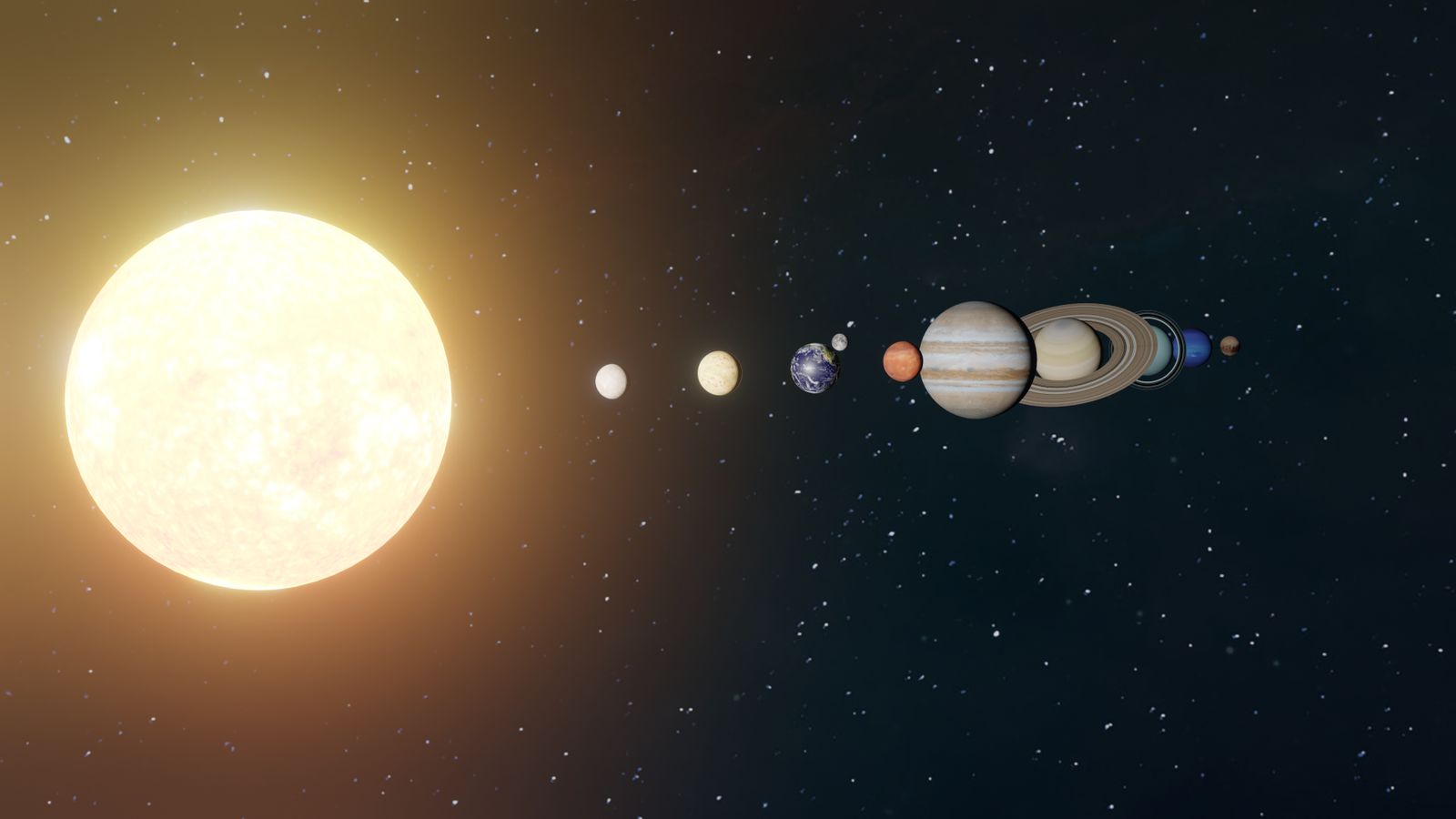
Q2. Which planet has the most confirmed moons?
Answer: Saturn — it has more than 270 confirmed moons, more than any other planet in our solar system. In fact, NASA’s guide to Saturn also describes its rings and its large family of moons.
Q3. What is the hardest naturally occurring substance on Earth?
Answer: Diamond — carbon atoms form its very strong crystal structure. For example, only another diamond can scratch it.
Q4. Which element has the chemical symbol Au?
Answer: Gold — Au comes from aurum, the Latin word for gold. So, the symbol comes from Latin, not from the English name.
Q5. What is the speed of light in a vacuum?
Answer: 299,792,458 metres per second — about 300,000 kilometres per second. In fact, light from the Sun takes about eight minutes to reach Earth.
Q6. Which planet rotates on its side, with its poles pointing almost towards the Sun?
Answer: Uranus — its axis tilts by about 98 degrees, probably after a huge collision long ago. As a result, each pole gets about 21 years of daylight, then 21 years of darkness.
Q7. Which gas makes up about 78% of Earth’s atmosphere?
Answer: Nitrogen — oxygen makes up only about 21% of the air we breathe. So, most of the air you breathe is nitrogen, not oxygen.
Q8. Which element has the atomic number 79?
Answer: Gold — gold has 79 protons in each atom, which is why its atomic number is 79. In other words, the atomic number simply counts the protons in an atom.
3. Round 2: History
History questions separate good quizzers from great ones. In fact, these cover famous dates, empires and firsts. So, how many do you know?
Q9. In which year did the Berlin Wall fall?
Answer: 1989 — the Berlin Wall came down on November 9, 1989, opening the way to German reunification. As a result, Germany reunited less than a year later, in October 1990.
Q10. Which ancient civilisation built Machu Picchu in Peru?
Answer: The Inca — Inca builders raised the citadel in the 15th century for the emperor Pachacuti. So, it stayed unknown to the outside world until 1911.
Q11. In which year did the Second World War end?
Answer: 1945 — the war in Europe ended in May 1945, and the war in the Pacific ended in September 1945. After that, the United Nations was founded later in 1945.
Q12. Which empire did Genghis Khan found?
Answer: The Mongol Empire — it became the largest land empire in history. As a result, it stretched from Eastern Europe to the Sea of Japan at its greatest extent.
Q13. In which year was the Great Fire of London?
Answer: 1666 — the fire started in a bakery on Pudding Lane and burned for four days. After that, London rebuilt with wider streets and brick buildings.
Q14. Which ship carried the Pilgrims to America in 1620?
Answer: The Mayflower — it landed at Plymouth Rock in Massachusetts. So, the Pilgrims first landed at Cape Cod before they reached Plymouth.
Q15. Who was the first woman to win a Nobel Prize?
Answer: Marie Curie — she won the Nobel Prize in Physics in 1903 and the Nobel Prize in Chemistry in 1911. In fact, she is still the only person to win Nobel Prizes in two different sciences.
Q16. Which country was the first to give women the right to vote?
Answer: New Zealand — it gave women the vote in 1893, before any other country. After that, many other countries followed over the next few decades.
4. Round 3: Geography
First, remember that capitals, rivers, deserts and borders all appear in this round. In fact, geography is where many quiz players lose points. So, how well do you know the world map?
Q17. What is the largest hot desert in the world?
Answer: The Sahara — it covers about 9 million square kilometres across North Africa. In fact, it is almost as large as the United States.
Q18. What is the capital city of Australia?
Answer: Canberra — Sydney is the largest city, but Canberra is the capital. So, many visitors guess Sydney, but Canberra is a planned city that serves as the capital.
Q19. Which river is generally considered the longest in the world?
Answer: The Nile — it is about 6,650 kilometres long and flows through north-eastern Africa. In fact, the Nile flows north, which surprises many people.
Q20. Which country has the most natural lakes in the world?
Answer: Canada — Canada has more than 60% of the world’s lakes by most estimates. So, Canada has more lakes than the rest of the world combined.
Q21. Mount Everest is part of which mountain range?
Answer: The Himalayas — the range runs across Nepal, India, China, Pakistan and Bhutan. For example, Everest sits on the border between Nepal and China.
Q22. What is the smallest country in the world?
Answer: Vatican City — Rome, Italy, entirely surrounds it, and it covers only about 0.49 square kilometres. In fact, St Peter’s Basilica stands inside this tiny country.
Q23. Which African country was formerly known as Rhodesia?
Answer: Zimbabwe — it became Zimbabwe in 1980. So, the name changed when the country gained independence in 1980.
Q24. What is the capital of Iceland?
Answer: Reykjavik — it is the world’s northernmost capital city. In fact, Iceland heats most of its homes with underground geothermal heat.

5. Round 4: Arts, Books and Culture
Books, paintings and music — this round tests the culture questions that appear in almost every hard trivia quiz. For example, you will meet Shakespeare, Austen and Van Gogh below. So, which ones do you know?
Q25. Who wrote the novel 1984?
Answer: George Orwell — Orwell published it in 1949 and introduced the idea of Big Brother. In fact, the book’s ideas, such as Big Brother, are still part of everyday language today.
Q26. Who painted the Mona Lisa?
Answer: Leonardo da Vinci — he painted it in the early 1500s, and it now hangs in the Louvre in Paris. So, millions of visitors see it in Paris every year.
Q27. Who wrote Romeo and Juliet?
Answer: William Shakespeare — Shakespeare wrote the play in the 1590s. In fact, it is one of the most performed plays in the world.
Q28. Who wrote Pride and Prejudice?
Answer: Jane Austen — Austen published it in 1813. So, it has stayed in print for more than 200 years.
Q29. Which artist painted The Starry Night?
Answer: Vincent van Gogh — he painted it in 1889 while staying in Saint-Remy-de-Provence, France. After that, the painting became one of the most famous works of art in the world.
Q30. Who wrote the Harry Potter books?
Answer: J.K. Rowling — the first book, Harry Potter and the Philosopher’s Stone, came out in 1997. As a result, the series became one of the best-selling book series of all time.
Q31. In which language was Don Quixote originally written?
Answer: Spanish — Miguel de Cervantes wrote it in Spanish and published it in two parts, in 1605 and 1615. So, many people call it the first modern novel.
Q32. Who composed The Four Seasons?
Answer: Antonio Vivaldi — Vivaldi wrote the four violin concertos in the 1720s. In fact, each concerto describes a season of the year.

6. Round 5: Sport, Food and General Knowledge
Finally, the last round mixes sport, food and general knowledge. In fact, these are the questions that often decide the winner. For example, a single football or food question can change the result. Also, if sport is your best subject, try our sports trivia questions and answers for a sport-only challenge.
Q33. How many players does a football (soccer) team have on the field at one time?
Answer: 11 — including the goalkeeper. So, each team sends out ten outfield players and one goalkeeper.
Q34. In which country was chess invented?
Answer: India — people in India played the early form of the game, called chaturanga, more than 1,000 years ago. After that, the game spread west to Persia and Europe.
Q35. In which sport would you perform a slam dunk?
Answer: Basketball — a slam dunk is when a player jumps and puts the ball directly through the hoop. In fact, the dunk became famous when players such as Michael Jordan made it a highlight.
Q36. What is the main ingredient in guacamole?
Answer: Avocado — people mash it with lime juice, onion, tomato and chilli. So, fresh avocado is the key to good guacamole.
Q37. Which country is home to the kangaroo?
Answer: Australia — kangaroos are native to Australia and are one of its national symbols. In fact, kangaroos also appear on Australia’s coat of arms.
Q38. How many sides does a hexagon have?
Answer: Six — a hexagon is a six-sided polygon. For example, the cells of a honeycomb form hexagons.
Q39. What is the currency of Japan?
Answer: The yen — its symbol is ¥. So, look for the ¥ symbol on prices in Japan.
Q40. How many minutes are there in a day?
Answer: 1,440 minutes — 24 hours multiplied by 60 minutes. In other words, every day gives you 1,440 minutes to use.
7. How to Score Yourself — What Your Result Means
First, add up your points from all five rounds (40 maximum), then find your rank below:
- 0–15 points — Casual Player: You know the famous facts. Keep playing and your score will climb fast.
- 16–25 points — Strong Quizzer: You know a lot across many subjects. A few specialist topics are still waiting for you.
- 26–34 points — Trivia Expert: You could hold your own at almost any quiz night. Only the hardest questions tripped you up.
- 35–40 points — Quiz Champion: Near-perfect. You really do know it all — or very nearly.
Next, make it competitive: play in teams, give 30 seconds per question, and award a bonus point for a correct answer with no help. For a music round, try our Taylor Swift quiz next. Also, football fans can test their knowledge with our NFL logo quiz.
8. Why Hard Trivia Questions Make Quiz Night Better
Hard trivia questions work for almost any audience:
- First, they stop one team winning too easily. When every question is easy, the fastest team always wins. However, hard questions give everyone a chance.
- Next, they start conversations. A good hard question makes people argue, remember and look things up after the quiz.
- Finally, they work everywhere. Classrooms use them for revision, parties use them as an icebreaker, and friend groups use them to settle who really knows the most.
9. Tips to Get a Better Score Next Time
Want a perfect score next time? First, try a few honest shortcuts:
- First, learn the famous firsts. Firsts — first woman, first country, first winner — appear in almost every hard trivia quiz.
- Next, learn capitals and rivers. Geography questions are the easiest points to gain, because the answers never change.
- Also, read the explanations, not just the answers. The short note after each answer is there to help you remember it.
- Finally, play regularly. Trivia is a skill, and a short quiz every week is the fastest way to improve.
Final thoughts
Hard trivia questions are fun because they prove how much there is still to learn. Whether you scored 15 or 40, the best part of a quiz is the question you got wrong. In fact, you will remember that fact next time.
So, share your score, challenge a friend, and come back for another round. After that, the questions only get harder from here.
Frequently Asked Questions
How many hard trivia questions are in this quiz?
There are 40 hard trivia questions in five rounds of eight. First, you will meet science and history. Then comes geography, followed by arts and culture, and finally sport and general knowledge.
What is the hardest trivia question in this quiz?
Most players find the science and history rounds the hardest. For example, the questions about atomic numbers, the fall of the Berlin Wall and the first woman to win a Nobel Prize cause the most trouble.
Can I use these hard trivia questions for a pub quiz?
Yes. These questions work well for pub quizzes, quiz nights, classrooms and parties. First, split players into teams. Then give 30 seconds per question and use the scoring guide at the end.
What is a good score on a hard trivia quiz?
A good score is 26 or more out of 40. In fact, a score of 35 or more puts you in the top tier of trivia players.
Are the answers to these hard trivia questions correct?
Yes. We checked every answer in this quiz. In addition, each one includes a short explanation, so you can see why it is correct.


9 Comments