
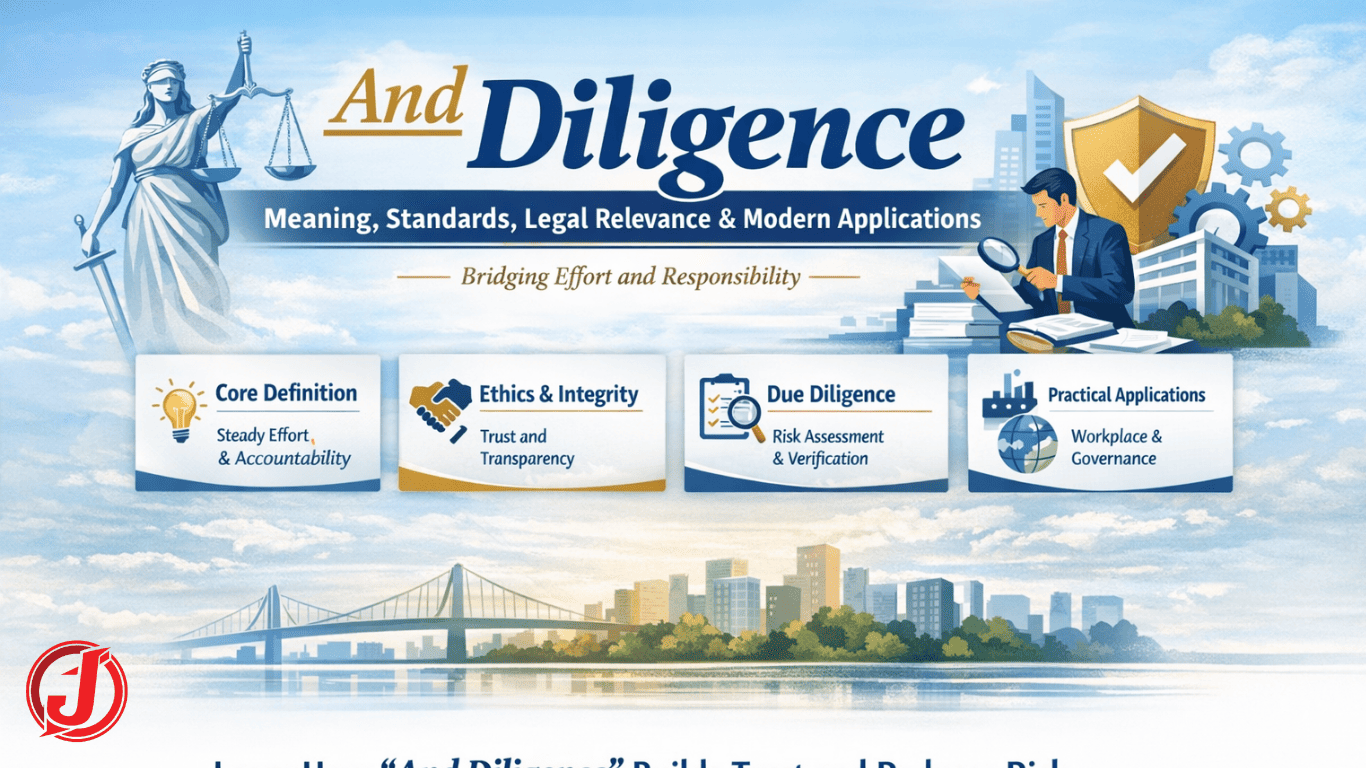
And Diligence – Meaning, Standards, Legal Relevance & Modern Applications
Introduction to “And Diligence”
A. Understanding the Power of the Phrase “And Diligence”
The phrase “and diligence” appears frequently in legal documents, professional codes of conduct, corporate governance policies, and ethical frameworks because it clarifies the standard of effort expected. Dilig ence alone means careful and persistent effort. However, when paired with another virtue—such as care and diligence, integrity and dilig ence, or discipline and dilig ence—the phrase becomes more precise and actionable. It defines not just how much effort is required, but what kind of effort is expected.
For example, care and diligence emphasizes attentiveness and responsibility. Integrity and dilig ence connects moral character with consistent execution. Discipline and dilig ence highlights structured, habit-based performance. In professional writing, these combinations reduce ambiguity. They signal that performance must be steady, ethical, and accountable—not rushed or careless.
The difference between simple effort and responsible effort lies in intention and verification. Anyone can work long hours, but dilig ence requires checking assumptions, verifying outcomes, documenting decisions, and correcting mistakes. That is why courts, regulators, and boards frequently evaluate whether actions were performed with “reasonable care and diligence.” The phrase signals accountability. It ensures that effort is measured not only by speed or output, but by accuracy, foresight, and ethical responsibility.
Why Diligence Matters in a Complex World
Modern industries operate in a landscape defined by regulation, transparency, digital exposure, and stakeholder scrutiny. Organizations must comply with legal standards, data protection laws, environmental policies, and financial reporting requirements. In this environment, dilig ence becomes a strategic necessity rather than a personal virtue.
Regulatory frameworks increasingly require documented oversight and risk controls. Stakeholders—investors, customers, employees, and regulators—expect transparency and accountability. A single oversight can damage reputation instantly in the age of digital communication. Therefore, dilig ence acts as a safeguard. It ensures that decisions are informed, processes are monitored, and risks are identified early.
Diligence also strengthens long-term credibility. Businesses known for careful execution and responsible oversight earn trust. Professionals who consistently demonstrate dilig ence are promoted into leadership roles because they reduce uncertainty. In a world moving faster each year, dilig ence slows down only what must be slowed down: high-risk decisions, safety-critical operations, and ethical dilemmas. That balance between speed and care defines sustainable success.
The Core Definition of Diligence
What Diligence Means in Simple Terms
In simple language, diligence means steady, careful, and persistent effort toward a task or responsibility. It is not occasional enthusiasm. It is consistent follow-through. A diligent person does not abandon work halfway, nor do they rush through important steps. They remain attentive to detail and committed to accuracy.
Working responsibly—not just working hard—is the key distinction. Hard work may involve intensity and time. Dilig ence involves correctness, verification, and accountability. It means reviewing outputs, checking facts, and ensuring completeness before declaring a task finished.
Attention, follow-through, and accuracy define diligent behavior. It shows up in meeting deadlines reliably, responding thoughtfully to challenges, documenting work clearly, and correcting errors promptly. Diligence protects quality because it reduces avoidable mistakes. Over time, it builds trust because outcomes become predictable and dependable.
Diligence as Both Action and Attitude
Diligence is not only what you do; it is how you think. As an action, it involves consistent effort and careful review. As an attitude, it reflects responsibility and ethical awareness. A diligent mindset asks, “Have I checked this properly?” and “Have I considered the consequences?”
Effort guided by judgment separates dilig ence from blind persistence. A diligent person does not repeat ineffective methods; they adapt thoughtfully. They consider risks, consult reliable sources, and seek clarity when uncertain. Ethical awareness ensures that dilig ence is aligned with fairness and integrity.
Accountability is central to this attitude. Diligent individuals take ownership of results. They do not shift blame when problems arise. Instead, they investigate causes, implement improvements, and prevent recurrence. This combination of action and mindset makes diligence a sustainable personal and professional strength.
Moral and Historical Foundations of Diligence
Diligence as a Human Virtue
Historically, diligence has been praised in philosophical and religious traditions as a moral virtue. Classical thinkers emphasized discipline and purposeful effort as pathways to excellence. Many religious teachings describe dilig ence as the opposite of laziness and neglect, encouraging believers to fulfill responsibilities faithfully.
Diligence builds character because it requires self-control, patience, and consistency. It teaches delayed gratification—the understanding that meaningful results require sustained effort. Unlike impulsive action, dilig ence is deliberate. It values preparation, reflection, and responsibility.
By practicing dilig ence, individuals strengthen resilience. They learn to persist through difficulty without compromising standards. Over time, this shapes identity. A diligent person becomes known for reliability and discipline. That reputation, once earned, carries weight in personal relationships and professional environments alike.
B. Cultural Importance Across Societies
Across cultures, diligence is associated with educational achievement, craftsmanship, and economic progress. Societies that prioritize dilig ence often emphasize long-term planning, accountability, and excellence in skill development.
In education, dilig ence encourages consistent study habits and intellectual curiosity. Craftsmanship, it ensures quality and precision. In governance, it promotes transparency and responsibility. Collectively, these practices create a culture of trust.
Diligence functions as a social trust mechanism because it reduces unpredictability. When people expect others to act diligently, cooperation becomes easier. Contracts are honored, standards are maintained, and responsibilities are fulfilled. This shared expectation strengthens institutions and fosters long-term stability.
Care and Diligence in Real Life
What Care and Diligence Means Practically
Care and diligence means combining attentiveness with sustained effort. In daily work, this includes reading instructions thoroughly, confirming details before acting, and completing tasks responsibly. It requires awareness of consequences and a commitment to doing things correctly.
Responsible execution of duties involves avoiding shortcuts that may create risk. For example, in healthcare, care and dilig ence may mean double-checking medication dosages. In finance, it may involve verifying calculations and compliance requirements. In engineering, it may include thorough safety testing.
Preventing errors is one of the greatest benefits of care and dilig ence. Small checks performed consistently can prevent large failures. Over time, this disciplined approach saves time, resources, and reputation.
Care and Diligence vs Perfectionism
Care and diligence does not mean endless refinement. Perfectionism often delays progress by demanding unrealistic standards. Dilig ence focuses on proportional effort—doing the appropriate level of checking based on risk.
Balanced effort ensures that high-risk decisions receive thorough review, while low-risk tasks are completed efficiently. Timely delivery remains important. Dilig ence aims for quality, not paralysis.
By balancing speed with responsibility, care and diligence maintains productivity while safeguarding standards. It prevents both recklessness and stagnation.
Integrity and Diligence as a Trust Standard
Ethical Reliability and Operational Reliability
Integrity refers to honesty and moral consistency. Dilig ence refers to reliable execution. When combined, they create a powerful trust standard. Integrity ensures that intentions are honorable. Dilig ence ensures that actions are competent.
Leadership credibility depends on both. A leader with integrity but no dilig ence may fail to deliver results. A leader with diligence but no integrity may deliver results unethically. Sustainable trust requires both virtues working together.
Workplace Application of Integrity and Diligence
In professional settings, integrity and diligence appear through transparent reporting, honest communication, and ethical decision-making under pressure. Employees demonstrate integrity by sharing accurate information, even when it is uncomfortable. They demonstrate dilig ence by completing tasks reliably and reviewing work carefully.
Together, these behaviors strengthen organizational culture. Teams that operate with integrity and dilig ence experience fewer crises and greater long-term stability.
Conclusion
Diligence serves as the bridge between effort and responsibility. It transforms activity into accountable action. The phrase “and dilig ence” strengthens professional language by clarifying expectations—linking dilig ence to care, integrity, discipline, and oversight.
In legal contexts, dilig ence defines standards of care. Business, it protects against risk and supports informed decision-making. In personal development, it builds credibility and trust. As global systems become more interconnected and transparent, dilig ence will remain essential for sustainable success.
FAQs
What does diligence mean in simple terms?
Diligence means applying careful, steady, and responsible effort to tasks, ensuring accuracy and follow-through.
Why is diligence important in professional life?
It reduces risk, prevents negligence, builds trust, and improves performance consistency.
Is diligence the same as hard work?
No. Hard work focuses on effort, while dilig ence emphasizes careful execution, verification, and accountability.
How does diligence protect against risk?
Through documentation, review processes, and proactive monitoring, dilig ence identifies and corrects issues early.
Can diligence be learned?
Yes. Through disciplined habits, structured systems, reflection, and continuous improvement, diligence can be developed over time.