
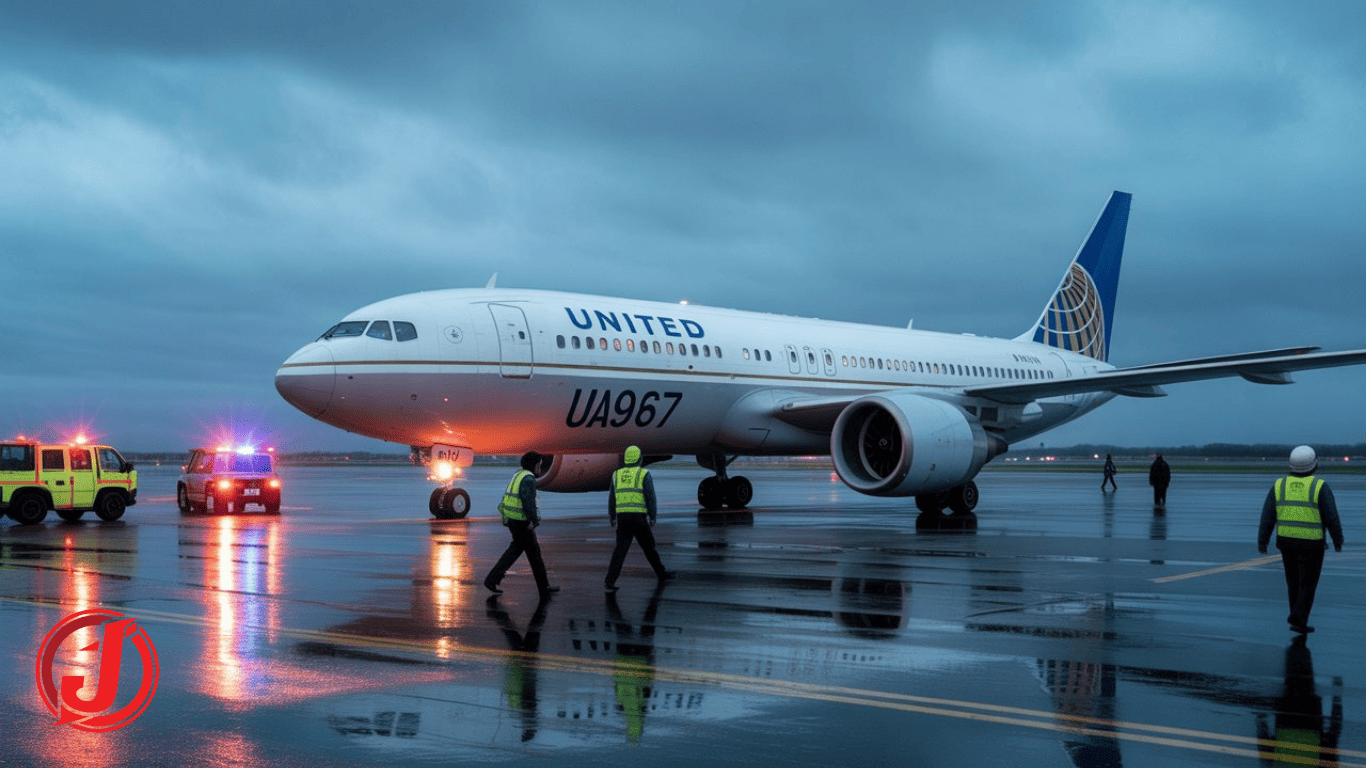
United Flight UA967 Diverted – Full Incident Report, Timeline & Safety Analysis (August 24, 2025)
Introduction to United Flight UA967 Diverted
On August 24, 2025, United Flight UA967 diverted during a scheduled transatlantic journey from Italy to the United States. The incident quickly gained attention online, with searches for “UA967 diverted today” and “United Airlines flight diversion” trending across aviation forums and flight-tracking platforms. Whenever a long-haul international flight changes course mid-Atlantic, it naturally raises questions among passengers, families, and aviation observers.
The good news is clear: the aircraft landed safely, and no injuries were reported. The diversion was a precautionary safety decision made by a trained flight crew responding to a technical alert and unusual cabin odor. While diversions may sound alarming, they are a well-established part of aviation safety procedures designed to prevent small issues from escalating.
This guide provides a complete, fact-based breakdown of the United Flight UA967 diversion, including the aircraft involved, the reason for the diversion, the landing airport, passenger experience, compensation rights under EU law, and the broader aviation safety lessons. Whether you were on board, tracking the flight, or researching airline safety procedures, this article delivers clarity, transparency, and expert-level insight into what happened and why.
Flight Details: Route, Aircraft & Operational Background
Scheduled Route Information
United Flight UA967 was scheduled to depart from Naples International Airport (NAP) in Italy and arrive at Newark Liberty International Airport (EWR) in the United States. This route connects southern Italy with the New York metropolitan region and is a key transatlantic service for both business and leisure travelers.
Transatlantic crossings follow carefully structured North Atlantic flight corridors. Aircraft typically fly optimized tracks based on winds, weather systems, and air traffic coordination between European and North American control centers. These long-haul routes involve extended periods over open ocean, meaning pilots must always remain aware of suitable diversion airports along the way.
On August 24, 2025, UA967 departed Naples more than three hours behind schedule due to routine operational factors. These included weight and balance adjustments, fuel calculations for Atlantic winds, and standard pre-flight maintenance checks. While inconvenient, such delays are not unusual and are unrelated to the later diversion decision.
Aircraft Information
The aircraft operating UA967 was a Boeing 767-322ER, registration N671UA. The Boeing 767-300ER (Extended Range) is specifically designed for long-haul international routes. It is a twin-engine, wide-body aircraft capable of safely crossing oceans under strict ETOPS (Extended-range Twin-engine Operational Performance Standards) regulations.
The 767 is equipped with advanced avionics, redundant safety systems, and sophisticated environmental controls. Systems onboard continuously monitor cabin airflow, equipment cooling, electrical performance, and engine parameters. If any value falls outside predefined safety limits, the system alerts the flight crew immediately.
This aircraft type has served global airlines for decades and is widely regarded as a reliable long-haul platform. The safety systems installed on N671UA played a critical role in identifying the issue that led to the UA967 emergency landing precaution.
Why Was United Flight UA967 Diverted?
Mid-Flight Incident Overview
Approximately seven hours into the transatlantic crossing, the cockpit crew detected a burning odor in the cabin. Around the same time, an onboard monitoring system generated an alert connected to the aircraft’s forward equipment exhaust fan, which is part of the environmental control and cooling system.
No visible flames or smoke were reported. However, in aviation, even an unexplained odor combined with a technical alert warrants immediate evaluation. Aircraft systems are designed to detect early anomalies before they escalate.
This dual indication — odor plus system alert — prompted the crew to treat the situation seriously. The event did not constitute a confirmed fire, but it represented an unresolved technical condition that required ground inspection.
Location at Time of Incident
At the time of the alert, UA967 was approximately 460 nautical miles east-southeast of St. John’s, Newfoundland. In transatlantic operations, pilots constantly track suitable diversion airports within reach under ETOPS requirements.
Because of its strategic location along North Atlantic routes, St. John’s represented the closest practical diversion option. Continuing toward Newark with an unresolved technical alert over open ocean would have extended exposure to potential risk.
Captain’s Decision Process
The captain coordinated with United Airlines operational control on the ground. Together, they assessed aircraft data, weather conditions, and available airports.
The decision was made to divert as a precautionary measure. It was not a panic-driven reaction but a calculated safety-first choice. Aviation philosophy emphasizes resolving uncertainties on the ground rather than monitoring them mid-ocean.
This distinction is important: the UA967 diversion was precautionary, not a confirmed emergency event.
The Role of Aviation Safety Protocols
Aircraft Monitoring Systems
Modern aircraft include advanced Environmental Control Systems (ECS) that regulate airflow, temperature, and cooling for avionics compartments. Sensors monitor airflow rates and fan performance in real time.
If the forward equipment exhaust fan operates outside safe parameters, a cockpit alert is triggered. This early-warning system exists precisely to prevent overheating or electrical complications.
The Boeing 767’s monitoring systems functioned exactly as designed, giving pilots actionable information before a more serious condition could develop.
Why Diversions Happen Without Visible Fire or Smoke
One of aviation’s foundational principles is prevention. The industry follows a rule often summarized as: “When in doubt, land.”
A diversion does not mean there is a fire or catastrophic failure. It means uncertainty exists. Instead of waiting for visible smoke or system escalation, crews act conservatively.
The United Flight UA967 diversion demonstrates how modern aviation prioritizes caution over schedule adherence. This approach is one reason commercial aviation remains statistically one of the safest forms of transportation worldwide.
Diversion Timeline: Step-by-Step Breakdown
Pre-Departure – August 24, 2025
UA967 departed Naples more than three hours late due to operational factors.
Seven Hours Into Flight
Crew detected a burning odor. Forward equipment exhaust fan alert activated.
Diversion Decision
Captain coordinated with airline operations and selected diversion airport.
Safe Landing
The aircraft landed safely at St. John’s International Airport (YYT). No injuries reported.
Post-Landing Procedures
Maintenance teams inspected the aircraft. Passengers were assisted with rebooking and accommodations.
Why St. John’s Was the Ideal Diversion Airport
Geographic Importance
St. John’s sits along key North Atlantic air routes, making it a primary diversion point for flights traveling between Europe and North America.
Aviation History Significance
The region holds historic aviation importance. In 1919, aviators Alcock and Brown completed the first nonstop transatlantic flight departing from Newfoundland.
Decades later, during the September 11, 2001 airspace closure, Newfoundland communities welcomed thousands of diverted passengers — a story later immortalized in the Broadway musical Come From Away.
Infrastructure Capabilities
St. John’s International Airport has long runways capable of handling wide-body jets, international customs facilities, and emergency response infrastructure. It is well-equipped for unexpected international arrivals.
How United Airlines Responded
United Airlines initiated maintenance inspections immediately after landing. Engineers evaluated the exhaust system and surrounding components before clearing the aircraft for further service.
Passenger communication remained ongoing throughout the delay. Ground staff provided updates and coordinated rebooking options. Travelers requiring overnight stays received hotel accommodations and meal vouchers.
Airline response procedures are designed to minimize disruption while maintaining strict safety standards.
What Passengers Experienced Onboard
Passengers likely experienced initial uncertainty upon hearing of the diversion. However, reports indicate the crew maintained calm professionalism.
The landing itself was smooth and conducted under standard procedures. Once on the ground, airline staff provided structured assistance.
While unexpected diversions are inconvenient, the handling of UA967 reflected organized and methodical crisis management.
Passenger Rights & EU Compensation Rules
Because UA967 departed from Italy, EU Regulation EC 261/2004 may apply.
If the diversion resulted from a technical issue within airline control, compensation of up to €600 per passenger may be available depending on total arrival delay.
If classified as extraordinary circumstances, compensation may not apply.
Passengers should retain boarding passes, receipts, and written communication from the airline when submitting claims.
Is United Flight UA967 Diverted Still Relevant Today?
Searches for “ua967 diverted today” continue due to flight number reuse. Airlines reuse flight numbers on different dates.
For real-time updates, passengers should consult:
- United Airlines official website
- FlightAware
- Flightradar24
Aviation Safety Lessons from UA967
- Monitoring systems prevent escalation.
- Precautionary diversions reflect operational strength.
- Crew training ensures measured decisions.
- Passenger support extends beyond flight operations.
The United Airlines flight diversion illustrates aviation’s layered safety philosophy in action.
Frequently Asked Questions
Why was United Flight UA967 diverted?
Burning odor combined with equipment alert prompted precautionary diversion.
Where did UA967 land?
St. John’s International Airport, Canada.
Was it a full emergency?
No confirmed fire or injuries. Precautionary landing.
Was anyone hurt on UA967?
No injuries reported.
Can passengers claim compensation?
Potentially under EU261 depending on final technical findings.